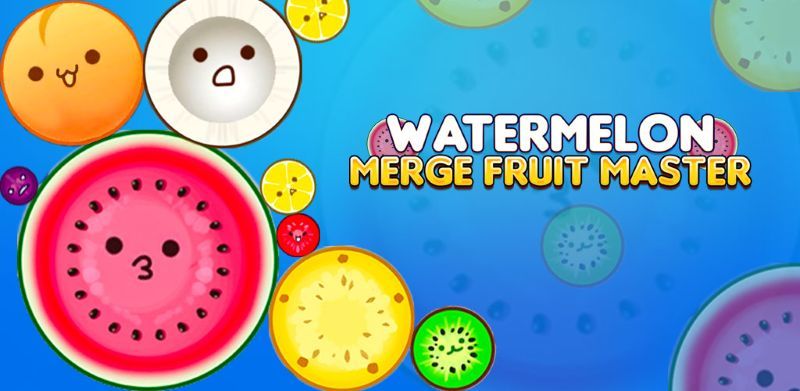
Merge Melons is won by controlling space and merge timing: stack with intent, create safe pairings, and prevent mid-size clutter from turning the board into chaos. Based on repeatable high-score patterns in Merge Melons, the biggest gains come from a simple system, not luck: two-lane stacking, two-move planning, and low-bounce placement that keeps your runs stable long enough for massive merges.
Next, you will learn 6 savage tricks that make the game feel predictable, stop overflow deaths, and unlock bigger combos without panic.
How Merge Melons Works and Why Runs Collapse
Merge Melons rewards two things at the same time:
- Efficiency: merging smaller fruits into bigger ones with minimal wasted space
- Stability: keeping the pile low and predictable so you do not overflow
Most runs fail for predictable reasons:
- Random placement: you drop where it “seems fine,” but you create future blocks.
- Size clutter: too many mid-size pieces spread across the board.
- Late panic: you try to “save” the run with risky drops that bounce and scatter.
Your goal is to replace randomness with structure.
Savage Trick: Build Two Lanes, Not One Pile
The fastest way to lose is building one tall, messy mountain. Instead, create two lanes that each serve a job:
- A merge lane: where you intentionally pair identical fruits
- A buffer lane: where you park awkward pieces until they can be merged cleanly
How to set up the two-lane structure
- Keep the center lower than the sides (or vice versa) so items roll into predictable zones.
- Choose one “primary wall” side where you stack more tightly.
- Use the other side as parking for pieces that do not have a match yet.
Why this works
Two lanes reduce “surprise collisions.” You always know where your next match is likely to happen, and you prevent the board from becoming a scattered mid-size mess.
Savage Trick: Play the Next Two Drops, Not the Current Drop
Most players only think about the fruit they are holding. High-score runs come from planning two drops ahead.
Your two-drop checklist
Before you release, decide:
- Where will this fruit live if it does not merge immediately?
- Where does its matching pair already exist (or where will you create it)?
- If it bounces, what is the worst landing spot, and how do I reduce that risk?
A simple rule that improves control instantly
- If you cannot name the “parking spot,” do not drop yet.
Wait a beat, reposition, and drop cleanly.
This keeps your board intentional and reduces panic placements.
Savage Trick: Stop Chasing Combos, Start Building Merge Traps
Big chains feel amazing, but chasing them directly often breaks your structure. The more reliable method is building merge traps: setups where merges happen automatically with low risk.
What a merge trap looks like
You create a small “pocket” where:
- Two identical fruits are already close
- The next drop will nudge them together safely
- The resulting bigger fruit will land in a stable zone
How to create merge traps consistently
- Place identical fruits one width apart so a gentle nudge will connect them.
- Use the wall for alignment
- Walls reduce rolling and help pieces settle.
- Trigger traps with a smaller drop
- Smaller pieces cause less chaos and can be used as “push tools.”
The savage part: you stop forcing merges and start letting the board do the work.
Savage Trick: Treat Mid-Size Fruits as Toxic Until They Are Paired
In Merge Melons, tiny fruits are manageable and huge fruits are valuable. Mid-size fruits are dangerous because they are the ones that block lanes and raise the pile without immediate payoff.
What to do with mid-size fruits
- Never scatter them
- Scattered mid-size pieces create dead zones.
- Pair them immediately or park them together
- Your buffer lane should contain grouped mid-sizes, not singles everywhere.
- Compress them near a wall
- Mid-sizes become safer when they cannot roll far.
The “two-of-a-kind” rule
- If you create a mid-size fruit, your next priority is creating its match.
This single rule prevents the slow, silent death where your board fills with unmergeable medium clutter.
Savage Trick: Use Soft Drops and Controlled Bounces
Physics is not your enemy. Uncontrolled physics is. Your aim is to reduce bounce energy and prevent pieces from becoming pinballs.
How to lower chaos on every drop
- Drop from the lowest safe height
- Less fall time means less bounce and less rolling.
- Avoid dropping onto rounded peaks
- Rounded tops act like ramps and cause unpredictable slides.
- Land on flat “shelves”
- Build small flat zones where new fruits settle instead of ricocheting.
When to use bounce intentionally
Bounce can be useful, but only in controlled situations:
- To nudge a near-match together
- To roll a small fruit into a pocket
- To break a deadlock when the board is still low
If the pile is high, bounce is usually a losing play.
Savage Trick: Win the Endgame by Lowering the Ceiling, Not Raising the Score
Most runs end not because you cannot merge, but because you merge in a way that raises the pile and reduces your remaining safe space.
Endgame priorities (when the board feels tight)
- Stabilize first
- Choose drops that create immediate merges or safe parking.
- Flatten the highest peak
- Your topmost spike is the real enemy, not the missing combo.
- Sacrifice a “pretty” merge if it costs control
- A safe merge that lowers chaos is worth more than a risky chain that ends the run.
The endgame discipline rule
- If the top third of the board is crowded, stop gambling.
Play for stability, compress to walls, and rebuild lanes.
This is how you turn “almost good runs” into winning runs.
Common Mistakes That Make Merge Melons Feel Unfair
If Merge Melons feels random, it is usually one of these patterns:
- Greedy center stacking
- You create a tall mountain that spills sideways unpredictably.
- Scattered mid-size fruits
- You lose matching potential and waste space.
- Dropping from too high
- Bounce turns a good plan into chaos.
- Forcing merges on steep slopes
- The result rolls away and breaks structure.
- Ignoring the buffer lane
- Without a parking system, every drop becomes an emergency.
Fixing even one of these will make the game feel dramatically more controllable.
A Simple Practice Routine to Improve Fast
Use short practice blocks with one focus each:
Stability block
- Only drop from low height.
- Aim to keep the pile flat for as long as possible.
Pairing block
- For every fruit you create, immediately plan its matching pair.
- Do not allow isolated mid-sizes.
Endgame block
- Intentionally play until the board is crowded.
- Practice flattening peaks and rebuilding lanes without panic.
This training makes your skill consistent rather than lucky.
Bubble Shooter: Control the Board Before You Chase Big Combos
Bubble Shooter rewards the same core habit that wins in Merge Melons: reduce chaos by shaping the board first, then take high-value shots when the setup is safe. If you treat each drop like a planned shot, build stable “lanes,” and avoid greedy moves that create clutter, you will keep the playfield under control long enough to trigger bigger merges and win big.
FAQ
What is Merge Melons?
Merge Melons is a fruit merge puzzle game where you drop fruits to combine identical ones into larger fruits and score points by creating bigger merges.
How do you win big in Merge Melons?
You win big by controlling space, pairing mid-size fruits quickly, and building stable merge setups that avoid overflow.
What is the best strategy for beginners?
Use two lanes: one lane for planned merges and one lane for parking pieces until you can match them safely.
Why do my runs end so quickly?
Most quick losses come from high drops (too much bounce), scattered mid-size fruits, and building one tall pile instead of stable lanes.
Should I always chase chain reactions?
No. Chains are great, but forcing them often creates chaos. Build merge traps so chains happen safely.
How do I stop fruits from bouncing everywhere?
Drop from the lowest safe height, land on flat shelves, and avoid dropping onto rounded peaks that act like ramps.
What is the biggest mistake in the endgame?
Gambling for a huge combo when the board is already high. Endgame is about flattening peaks and preserving safe space.
How do I manage mid-size fruits better?
Treat them as toxic until paired: keep them grouped near a wall and prioritize creating their match immediately.
Is there a “perfect” side to stack on?
Not universally. Pick one main side as your compression wall and keep the other side as a buffer lane. Consistency matters more than the side.
What is the fastest way to improve my high score?
Practice stability first, then pairing discipline, then endgame control. Better control creates longer runs, and longer runs create higher scores.
Final takeaway
Merge Melons stops feeling chaotic when you stop playing it like a reaction game and start playing it like a space-control system. Build two lanes, think two drops ahead, create merge traps, neutralize mid-size clutter, reduce bounce chaos, and play the endgame for stability. Apply these 6 savage tricks consistently, and you will unlock bigger merges, longer runs, and higher scores in Merge Melons.